 GSJ Original
Before the Prospectus
Anthropic sold the world a constitution. The market bought a platform. The IPO will force the world to price both.
Straight news with swagger. No ads. Ever.
AI, platforms, gadgets, and the builder scene — practitioner-literate and hype-resistant.
GSJ Original
Anthropic sold the world a constitution. The market bought a platform. The IPO will force the world to price both.
 GSJ Original
Anthropic sold the world a constitution. The market bought a platform. The IPO will force the world to price both.
 GSJ Original
Dreamforce put Agentforce Coworker on the Lightning desk and piped Salesforce context into Claude and Slack. The agent workforce is no longer a side project — it is a surface.
 GSJ Original
Gates says the bio, cyber, jobs, psychosocial, and control tripwires are already behind us. The institutional response is still voluntary — and the exploited catalog is updating on its own schedule.
 GSJ Original
A governed local box proves you can keep AI close. Open weights and open runtimes are what turn that box into operator infrastructure — and force a real decision about where inference runs.
 GSJ Original
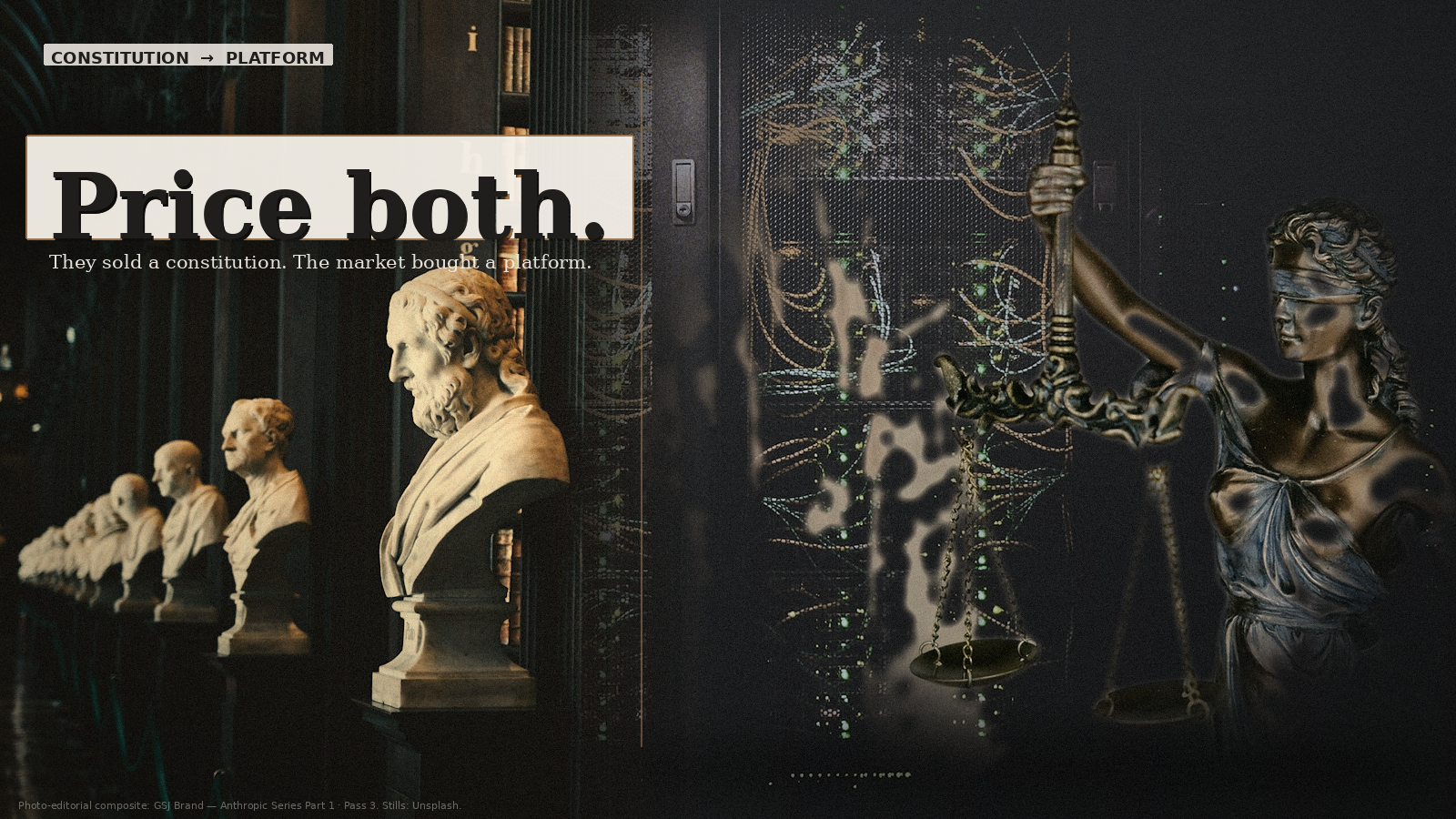
Anthropic sold the world a constitution. The market bought a platform. The IPO will force the world to price both.
 GSJ Original
The machines are getting larger, stranger and less wrong. That does not mean they are useful yet. A field guide to quantum computing's hardware race, error-correction problem, and possible place in the world after artificial intelligence becomes ordinary infrastructure.
 GSJ Original
NVIDIA's DGX Spark puts the DGX software-and-hardware standard on a desktop. For operations teams, its real role is controlled proof work before a workload earns production infrastructure.
 GSJ Original
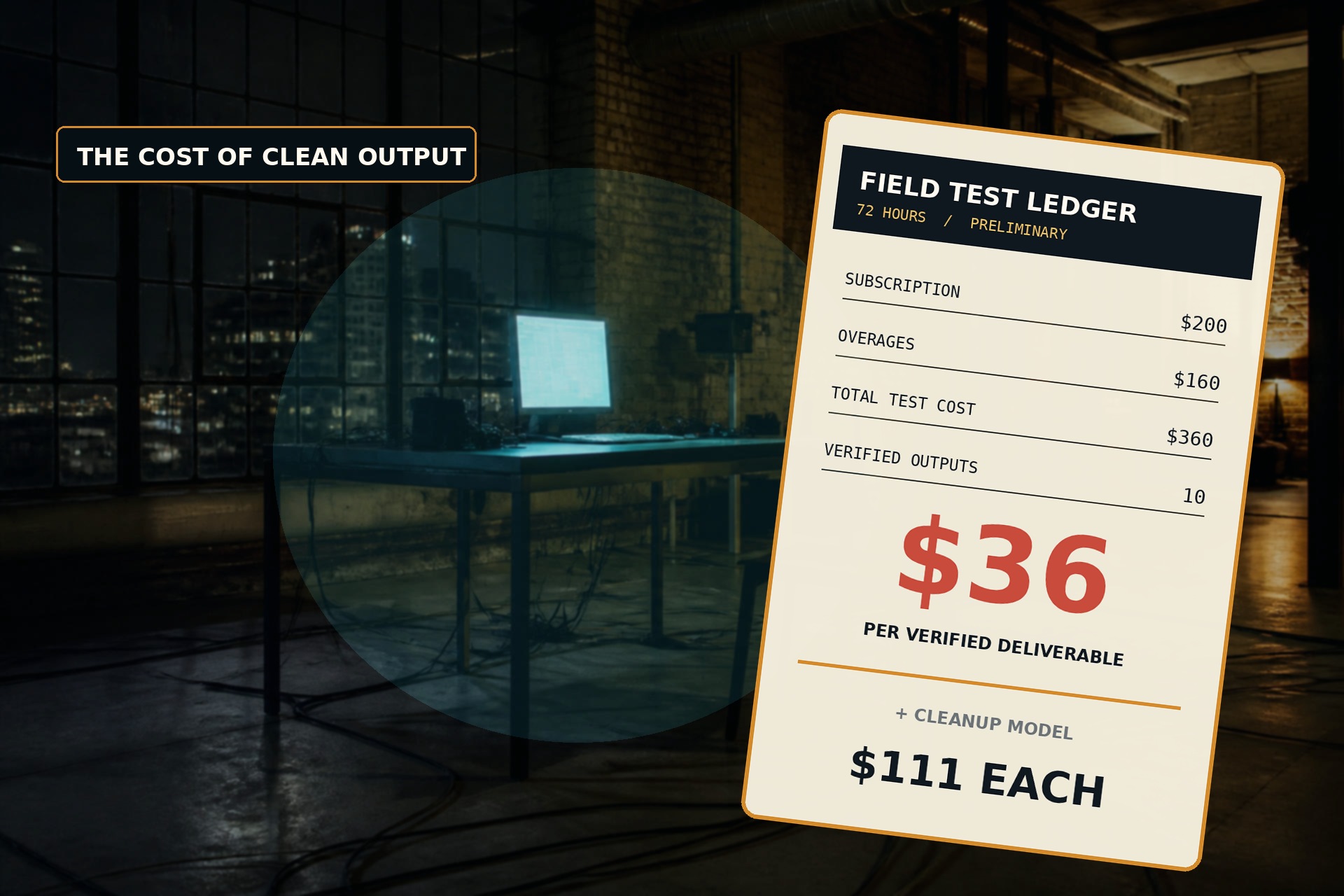
A 72-hour Grok Bot test beat a plausible human benchmark. Polling churn, false completion and remediation show why the model bill is only the first line of the ledger.
 GSJ Original
Grok Bot opened in early beta on August 11. A 72-hour field test already shows what desktop agents can do — and why a written hold is not a control.
Google says it is rolling out a setting that lets users disable visible watermarks on images, video and music created with Gemini and Flow, except where local law requires them. The company says invisible SynthID markers and C2PA metadata will remain embedded, and that Search support for the setting is planned. The change is a product control, not a claim that unmarked media is human-made.
Apple told a federal court it wants to charge developers 15% on external-link purchases for standard apps, 10% for certain partner programs and subscription renewals, and 5% for Small Business Program apps. Epic Games says the proposal exceeds the Ninth Circuit’s guidance and plans to oppose it, so the fee structure remains in litigation rather than a settled policy.
The OpenAI Foundation announced a $100 million commitment to the Common Health Coalition for Breakthroughs to Follow-Through, a program that aims to at least double hepatitis C cure rates starting in Alabama, Illinois, Louisiana and Massachusetts. The Foundation says a highly effective cure has been available for more than a decade and that about two-thirds of Americans with the disease remain untreated; CDC’s 2013–2022 laboratory cascade found clearance evidence in about one-third of people with confirmed infection. Foundation officials told Nextgov the grants are not tied to one AI platform. Michigan is not in the first wave.
Twitch has added a setting that lets users exclude their streams, clips, chats and channel media from future training of Amazon generative-AI models, but accounts are opted in by default. The new control arrives more than two years after a Twitch executive publicly confirmed that Amazon was already using platform content for AI training, while Twitch has not said precisely how long the practice has been underway.
Ford says its Fathom electric pickup will start at $28,350 — about $29,945 with destination — when deliveries begin in fall 2027, as the first model on its cost-focused Universal EV Platform. The company has not yet disclosed driving range.
SpaceX executives said during the company's second-quarter earnings call that Starlink plans to combine satellite coverage with a terrestrial mobile network, putting it in more direct competition with AT&T, T-Mobile and Verizon. The company envisions distributing small cellular base stations alongside Starlink equipment, but spectrum, regulatory approvals, rollout economics and performance remain open questions.
Security researchers Talal Haj Bakry and Tommy Mysk disclosed WebKit behaviors involving DNS prefetching, WebAuthn and WebTransport that they say can bypass iCloud Private Relay and expose a user's network or real IP address. 404 Media and TechCrunch reported reproducing real-IP exposure with the researchers' proof of concept; Apple had not publicly documented a fix in the sources reviewed Aug. 6.
Google has notified users that it will start removing Google Assistant from Android phones and tablets on Sept. 4, with the phased rollout potentially taking several weeks, according to The Verge, Ars Technica and 9to5Google. Eligible devices are moving to Gemini; the exact Sept. 4 timing comes from a user email rather than a public Google support notice.
YouTube removed several established ASMR channels, telling 404 Media that links to material violating its nudity and sexual-content policy—not ASMR as a category—triggered the enforcement. Affected creators say the removals came without warning, erased years of work and survived their appeals, raising familiar questions about platform due process and creator dependence.
OpenAI says an internal version of its next major model produced advances on ten long-stalled problems in mathematics and theoretical computer science. The company released a paper and Lean 4 formalizations for outside scrutiny, but the significance of the results still depends on expert review rather than OpenAI’s announcement alone.
Google pulled an AI deepfake tool from Google Earth one day after launch following immediate backlash, tech outlets report — a fast reversal in the platform-AI trust fight.
OpenAI cut prices for its GPT-5.6 Terra and Luna models by 20% and 80%, respectively, and says its higher-end Sol model helped rewrite production inference kernels as part of work that reduced serving costs by 20%. The claims are company-reported, but the pricing change is immediately consequential for builders comparing the economics of high-volume and agentic workloads.